Showing posts with label mls referee. Show all posts

Monday, September 1, 2014

Assistant Referee Mechanics Module


Assisting the Referee correctly and lucidly is the job of the AR, and the Assistant Referee Mechanics serve as the language with which to communicate during the match.  Through game experience and assessments, hopefully, the Assistant will gain a sense of when to assist, but these following basic signals must be mastered to be assigned games in the Diagonal System of Control

These videos are meant to be used as a tool for Athens Referee Academy Officials and all others looking to improve their game; other sources for this information are linked below.

Tracking Play--Goal

Tracking Play means staying level with the second to last defender or the ball whichever is closer to goal.  These videos do not track play; they are static "snapshots" of the view of the Assistant.

--at 1:03 we see the Assistant Referee mechanic for a Throw-in awarded to the Attack.
Then, we see the Assistant Fall behind play as the attack shoots on goal--when the ball becomes closer to goal than the second to last defender, the Assistant should be level with the ball.

The Assistant gets to the flag after the shot, yet manages to make a call with a clear and firm signal.

--1:11 the Assistant is signaling to the Referee to "Stop Play".  This mechanic is holding the flag straight up.

--then at 1:13 the Assistant who has established eye contact with Referee signals for a Corner Kick.


 --at 1:20 the Assistant signals for a Substitution, as High School Rules--and College-- permit subs at this time.  The Assistant drops his Flag after the Referee has acknowledged the Signal.

--at 1:29 the Assistant uses an unapproved signal, but one that is common to the High School fields in this region.  The Flag held diagonally downward informs the Referee that the substitution process is complete, and the game can restart.

--at 1:37 the Assistant signals a good goal by sprinting up the line.  He records the goal at an inopportune time, however, as the after-goal drama is in front of him.  The far side Assistant--in this case AR2--should record the goal first, then the Referee, and finally the near Assistant.  Of course, the Assistants will abide by the specific procedures set forth by the Referee in the Pre-Game Talk.

If the Assistant has questions about the Goal, if there was a foul or interference, he should remain at attention.

--at 2:00 the Assistant Returns to the positioning of "level to the second to last defender", and makes eye contact to signal to the Referee he is ready for the Kickoff.


Sidestepping & Throw In-- 

The Flag is raised at a 45 degree angle toward the direction of play.  In this case

--at :26 the Defending team is awarded the Throw In.

--then at :32 we see a quick signal awarding the restart to the Attack.

--and again to the Attack at :45

--We don't see the signal for the Corner Kick,  but by 1:11 the camera has positioned itself at the goal line behind the Assistant.

--After the ball is cleared by the defense, the Assistant maintains his positioning with the second to last defender.


Goal Kick and Substitution Mechanic--

 Goal Kick-- The Flag is raised in the right hand straight out, and the position is at the goal line.
Player Substitution-- The Flag is pinned between the palms and raised directly overhead.


  ~~~~~~~~~~~~~~~~~~~~~~~~~~~~~~~~~~~~~~~~~~~~~~~~
 Pre-Game Discussion

~~~~~~~~~~~~~~~~~~~~~~~~~~~~~~~~~~~~~~~~~~~~~~~~~~~~~~~~~~~~~~~~~~~~~~

Corner Kick--

  Assistant stands with a view down the goal line and will become goal judge if a ball rebounds into play.

 Signal is Downward Diagonal Fag in the Right Hand.


Offside & Ball In & Out of Play--

After the Corner Kick, the Assistant holds the flag in the wrong hand. It should return to the hand nearest the Referee as he sidesteps.

--:12 The Assistant Referee informs the Referee that the blue player was in an Offside position at the moment the ball was played, the signal is a Flag held straight up.

-- :33 Assistant then signals that ball has left the Field of Play.

The action moves down field and is quickly back; such is the life of an Assistant Referee.

--1:34 Assistant Signals for a Goal kick.


Foul & Foul Plus Caution--

 --:05 The Assistant is signaling for a foul, but ought to first have raised the flag straight up in the left hand to signal "stop the game", then waved the flag to indicate the foul.  Finally, the Assistant would tilt the Flag Diagonally to the left at a 45 degree angle to indicate the direction of the Restart to the Referee.

Flag mechanics are like a language, and so the better the mechanics are understood the better the communication, and the eaiser the work becomes.  Mastering the mechanics is accomplished through the system of review, called assessments and source for information is the United States Soccer Federation document--Guide to Procedures.

--:55  Assistant Referee indicates foul against the defense.  The Referee signals to the clock--High School and College mechanic only-- to stop time, then the Referee and the Assistant have a discussion. It is important to keep both sets of eyes on the players, during these brief down moments in the game.

As experience grows, Officials recognize that when play stops, the level of awareness must be heightened.

The Referee beckons the player and presents the Caution. Before the Restart the Referee performs the protocol for this level and correctly informs the coach of the misconduct.

The Assistants record the information as per the Referee's instructions in the Pre-Game, then scans the field for activity.

After setting the wall, the Referee takes his position before signaling with the whistle.  The restart is served in and the ball leaves the field.  The Assistant signals for a Goal kick.


Assistant Referee Mechanics Test: Spot The Error 

  Read the Guide and watch these videos, when Athens Referee Academy meets September 5th, we will discuss these videos, and you may be asked to explain how this signal could be improved.

end

Friday, June 20, 2014

Game Assignment US Soccer


Depending on the game assignment for US Soccer the work begins weeks out with the crew contacting the host facility, introducing ourselves, and arranging for accommodations.  Each referee in every season is responsible for having read and comprehended the League Manual, so we all know the various protocols.  To a greater or lesser extent these same protocols exist at every level of game management.

This PDL assignment requires we understand the League and the teams--Referees call this:
The Homework

  http://www.uslsoccer.com/standings/66628072.html

The Homework: The Teams

South Atlantic Division Pts GP W L T GF GA W L T GF GA W L T GF GA
West Virginia Chaos   179522161140111512156
Cincinnati Dutch Lions   15740315720210620151
Carolina Dynamo   1073318113204501146
Southern West Virginia King's Warriors   872328102016203128
River City Rovers   5613291211032022610
SC United Bantams   58152111610285050311


The players we will see have personalities by which we do not want to be surprised, so as much as we can learn about teams--how they attack, who are the ballholders, which players can a referee use an ally?-- we try to learn.

~~~~~~~~~~~~~~~~~~~~~~~~~~~~~~~~~~~~~~~~~~~~~~~~~~~~~~~~~~~~~~~

Preparation: The Kits

Three days out we begin to Pre-Hydrate.  Also the kits need packed for travel.


Travel: The Cars


Travel is a significant aspect of any assignment. Travel involves assuring transportation, planning a route, timing arrival, planning for contingencies such as meals, fuel, traffic, and getting lost.

Transportation can become significant in itself, days before this assignment my transportation became an issue.  I had to drop one of two games in this assignment because for transportation I rely on machines, and they break down.

"Dropping" a US Soccer Assignment is a misnomer.  Everyone including the crew works to fill the game with the best possible referee available.  In my case, The assignor was able to cover the Saturday game, but for the Friday game, no cover was found.,and I borrowed a car.  Thanks, Steve.


Travel: The River

Travel along this river is sublime. If it were not for the game timeline and the League protocols, I could see myself stopping and taking photos of the 'Hillbilly-Wal-Mart' I pass and seeing what it is like to live on the river.


Arrival:  The Stadium 


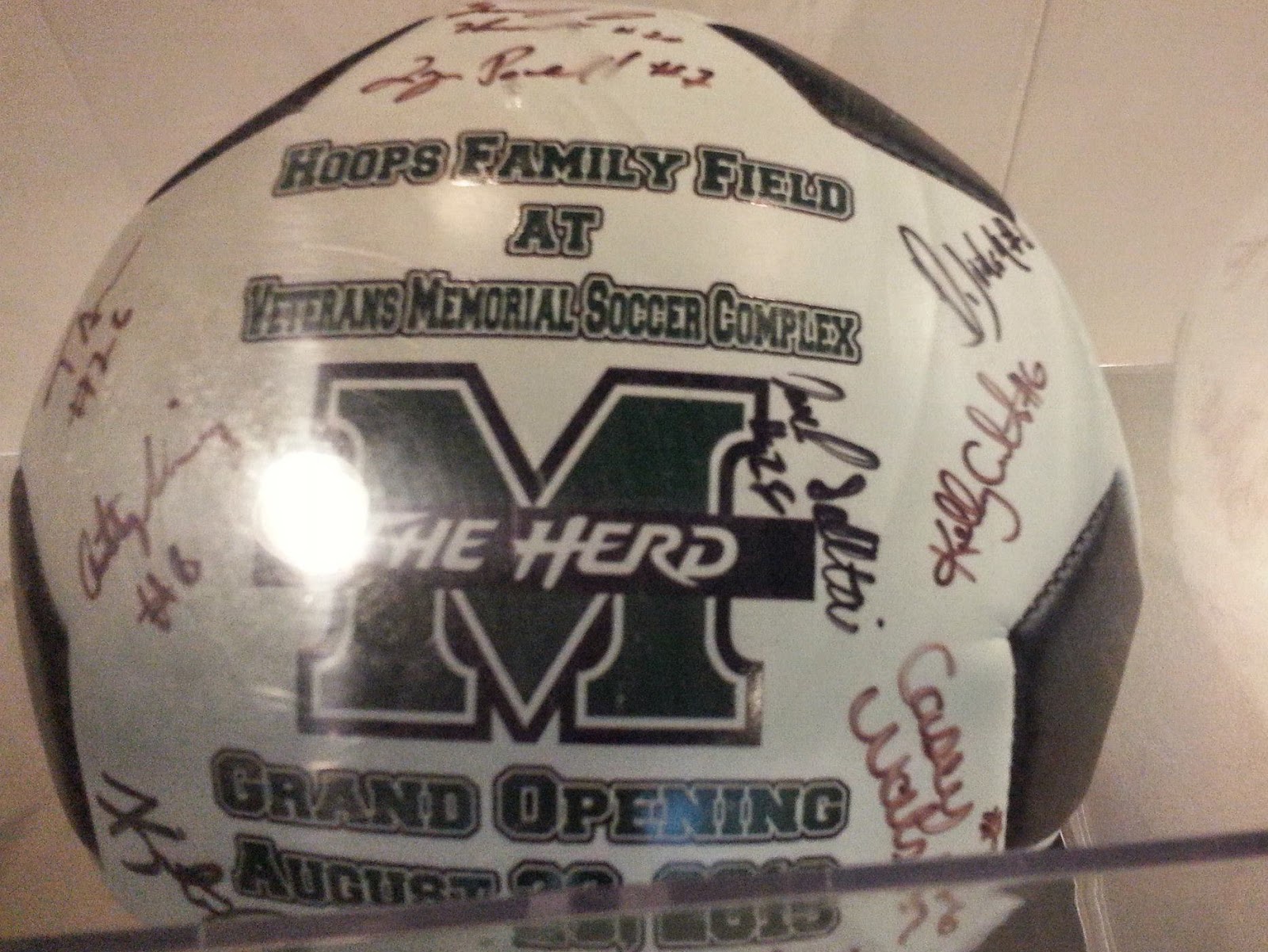
VETERAN’S MEMORIAL SOCCER COMPLEX
  ( HUNTINGTON, WV)

The Stadium sits where the Veterans's Memorial Fieldhouse sat in Huntington, West Virginia.


 The stadium is on the Marshall University campus; tomorrow night the team play at their home stadium in Charleston, WV, but for tonight this is their home venue.


Pre-Game: The Crew

Mistake number one, I arrive too early. I should have timed it better, but I didn't. So I am here early and breaking down the team dynamic. I should go across the street and shop for some things I do not need, text the crew or call them to arrange to arrive in a professional manor.

But I don't do that. I take a picture and a video of this stunningly beautiful field.


  Pre-Game: Communication Uniform


The Pre-Game is all about Game Management.  Just as a referee's ability to communicate with players will suffice as a lubricant when the game gets cranky.  Likewise, the ability of the crew to communicate with each other can expedite decision making during those moments of fast-paced action.  Here we attach the microphone system so we can talk during the match.


These referees are dedicated and professional. They have driven seven hours to get here for kickoff, and they will spend their summer traveling and getting their game performances reviewed.
Each of these pieces of Professional Grade equipment have been purchased by them, and these boys brought some cool gear with them.


Halftime: the First Debrief


From the moment we are enclosed within these doors we process the first 45 minutes.  Who are the players rising to our attention?  Which minutes in the half became critical and how did we work as a team?  The best part about the first half, at this point, is that it is over, and the other part is that the real game has just begun.


So we settle in for some moments, and let go. Walking out for the second half can be difficult for a referee because the sweat has dried and the mind has wandered.  I tend to make my flag-errors in the second half, and this is just one reason I do not consider myself a Top-League Professional. I love the game, but when these referees who are learning at every turn step in, I am very often impressed.

Post-Game: The Last Debrief

The PostGame is one reason I love to referee. We sit and discuss minutes in the match that mattered. The essential basis of this process is that there is no right or wrong.  Just as in the game the players may seem to squander a touch, yet come out a star in the end, so, too, can the referee arise from the ashes of a perilous ninety minutes with a renewed vigor.  We support each other so that the next time we can work better together.

This game went well and there were no calls for emotional recovery in the postgame locker room.  But each game is for the players, and each outing is for the crew.  If I take away one thing from this eleven hours, it is about how to become more lucid with what the game will expose to me, and it is within that part of me that can't wait for the next ninety minutes to begin.

Paperwork: Reports


The minutes of the match get recorded; the rosters, substitutions, cautions, goals, are all replayed on a document in triplicate. It is for this record, we are here.


Departure

Even though this photo is taken pre-game, it illustrates the final tenet of Game Management, which is Departure.

Though the Match lasts for ninety minutes, the Cauldron of Control and the bubble we referees sustain of objectivity lasts until we are free from the grounds and again have as much authority as the plain-clothes citizens we disguise ourselves to be.


TAD ALBANO,
This is a reminder of your upcoming game(s) for U.S. Soccer - Assignment.
If you have a problem working the game(s) listed below, you must contact your assignor immediately!
--------------------------------------------------
GAME INFORMATION #1
--------------------------------------------------
League: PDL
Game #: 343
Date: Jun 20 2014 7:00PM (Friday)
Level: ADULT - M - REGULAR SEASON (Soccer)
Location: VETERAN’S MEMORIAL SOCCER COMPLEX ( HUNTINGTON, WV)
Home: WEST VIRGINIA CHAOS
Away: RIVER CITY ROVERS


If you enjoy this Post, Check out--http://howtosoccerblog.blogspot.com/2013/02/referee-diary-night-at-indoor-game.html


Sunday, March 31, 2013

Athens Referee Academy

To perform at one's best is a personal goal, to extend that goal to a loose community of individuals is another matter.

If you enjoy this post check out--http://howtosoccerblog.blogspot.com/2013/04/referee-training-seminar-dayton-ohio.html

From List to Organization


What is the backbone of any successful sport league?  The organizing body, the players, and the coaches all have an essential place, but one lesson repeated in the game has been that good officials, referees, are the backbone of any soccer league, and any league is only as strong as its referees.

With that in mind, at the close of the 2012 youth and adult seasons, Athens Soccer Academy looked at the barriers to officiating professionalism and how those distracted from the 2012 local seasons.  In mid-winter Athens Soccer Academy began work on a new entity called Athens Referee Association.  By March ARA was born.

On March 26, 2013 Athens Referee Association met for the Inaugural Spring Leagues gathering.  From five in the evening till just before nine, we covered in brief detail the seventeen Laws of the Game, our Referee Season Calendar, and What To Expect From Each League.  Here is a record of how we did it.


Athens Referee Association

In seasons past we have met each other on the field, but never in this type of classroom setting.  In here we build a different kind of trust, a trust that can serve us out on the field.


Athens Referee Association seeks to:

1) Identify a local referee community
2) Provide league-relevant training to officials
3) Provide Liability Coverage for ARA assigned games
4) Model Professional Standards of Officiating and Officials' Training.


2013 Concussion Prevention

Ohio HB 143 of the 129th General Assembly mandates concussion protocols for coaches and officials working in youth sports.  These referees are briefed on what they will need to do before they arrive to referee games. I will need to see that they have passed the on-line course and gotten a certificate.  I give them the link:


The Leagues We Serve

Athens Referee Association-- referees must be a minimum age of fourteen-- now assigns officials to the Athens City Recreational Soccer League.  This  league offers us more nights/week to referee and a great training ground for our new referees.

Two other new leagues will use our association to schedule officials: Greater Athens Soccer Association League and Ohio University Women's Club.  See below for more details.

Referees, it seems, are in vogue in some circles.


Sunday

Adult Cup League
--Adult Coed Rec and Competitive combination
-- $15 per game/per ref for a two-person crew and $18 per game if a ref has to call a game solo.
Sundays from 4/7 - 6/2


Monday through Thursday

Athens City Recreation League
--5th/6th Grade // 3rd/4th Grade
--$15 per official, per game.
Monday, Tuesday, Wednesday, Thursday
Game times are 5:15pm and 6:15pm

Saturday

Southeastern Ohio Soccer League
--Under 8, Under 9, Under 10, Under 12, Under 14
--Refs $20/$25/$30 per game/U8 U10 one person crew/game.
$25/$30 per game/per ref two-person crew U12 and U14.
 9AM-5pm on Saturdays from 4/6 - 5/11


Greater Athens Soccer Association
--7th-9th Grade
--$15 per game/per ref for a two-person crew and $18 per game/ ref solo
 5 p.m. and 6 p.m. on Saturdays from 4/13 - 5/11


Ohio University Women's Club
--Spring Scrimmages
--$70 per per game
No games scheduled yet.


The Match


When certifying officials as an Instructor for the Federation, I follow the protocols and procedures.  However, none of these local leagues is affiliated, so I create the curriculum and instruction procedures for ARA.  I take a risk for this first clinic and use a technique I theorized about, but have never tried.

Since these referees all have some experience, I can take this risk.  I am trying to gain a heightened interest level from them.  All but one knows what a standard clinic setting is like.  I want to blow their expectations open.

Tonight we watch the first sixty minutes of a real game I have on VHS format.  We find the seventeen Laws and discuss them as they happen in a real game on the screen.

I want to stir their emotion.  I want engagement, excitement.  I want some of what I have experienced on a personal level from a few choice clinics from the Federation.  When they leave tonight, they should want to go to the next level.

In preparation for this inaugural clinic, I search my collection of VHS tapes, and pull out a Major League Soccer Classic.

Columbus Crew V Kansas City Wizards, June 6, 1996

This game will suit our purposes because it shows a good range of Laws and has several episodes of misconduct.  This game also will show how the Laws evolve.  There are a few episodes on the tape I expect will startle some of these more experienced referees, because they have been taught to respond differently to the modern game.  

Yet by far the best part of this game for my purposes is the style of the center official, Raul Dominguez.  For better or worse he seems to have the style these referees in front of me want to emulate, and I want to show the benefits and pitfalls of such a style as displayed in this game.

I keep a notepad that has the match-minute of each episode we will discuss, and a remote control to start, rewind, and restart the tape.  The game will happen on the screen in bursts, and we will interject with commentary and readings from the Laws and Questions and Answers

We also punctuate the screen discussion interludes by asking occasional quiz-like questions on some of the Laws.  I tell the guys from the start that this clinic is a first run, and there are areas I will need to improve.  I soon discover that one of these areas is the quiz questions, they  need to be selected with better discretion; but overall it seems the format works on this night for these referees. 

The game tape begins and in the third minute there is a blatant foul by an attacker. Dominguez goes in and uses a quiet word.  A nearby defender begins to interject, but Dominguez uses the public admonition.

Here we are in the third minute and already hitting the level of game management most appropriate to our highest level local leagues. This is what I hope will keep these guys engaged for nearly four hours.


We view applications of these laws and follow with readings and discussion: 1, 5, 6, 15, 16, 17, 4, 12, 10, 13, 8, 11, 9, 7, and 14.  We then cover Laws 2 and 3 right from the book.

In minute thirty, who steps into the screen as the fourth official?  None other than an anonymous Ohio referee from Dayton.  We stop the tape, and I hand them each a copy of Official Sports, the catalog for professional equipment.  On the cover is a referee from the northern part of our state.

I then say, 
"Ohio referees have been a part of this league from day one, and they are a part of this league today.  Are you willing to work?  Do you want to perform your best and see where those skills can take you?  Because there is a future in this avocation for young, athletic types like you."

We conclude the clinic by taking a look at our calendar so I have their availability.  They need to do some work to finish with the registration, and I will assign them games.  


The Make-up

Make-up Clinic

Friday, April 5
5-9pm
Athens City Recreation Center


The Model

I have been a Grade 6 Referee since 2006. If these guys are to believe me that we can advance in this game, I need to stop resting on my past accomplishments.  ARA has moved me to reach for the next level.


A few days after the clinic I request two assessments for upgrade in The U.S.S.F. system.


Submitted to DDA.04/07/2013 10:00 AMUpgradeAssistant Referee
Submitted to DDA.05/19/2013 10:00 AMUpgradeReferee


I locate an inclined path a few strides out my door.

Ref Run--Total


Running the Beast


.


Tuesday, March 19, 2013

Referee Diary: High School League


The drive to the fields today sets the tone.

This is the sound I hear when the ball is in play.

This is the feeling the flow of a clean game arouses in this referee.


This is the game under a similar tone.


But this is not the Under 12 League

This is the High School Boys League. 

We've read about their game tone in 

Referee Diary--A Night at the Indoor Game.


But those players have not been the problem.


Those players come to play the game.


The problem has been those players who see the field as other things.


The problem happens when the stage of the field

is used to display personalities and aggressions, 


rather than skills and strategies.


Tonight we finally keep the tone consistent for all seven games.


Tonight these boys have come just to play,


saying goodbye to the indoor game,


and looking forward to the grass 


and the sun.


Friday, February 22, 2013

Referee Assessment Report 1--Indoor Soccer

 
Referee Assessment Report
--THE LITTLE THINGS
 
Overall the assessors were very pleased with the officiating from week #1; yet there are some consistency issues we need to sort out. This week the theme is the little things. I hope you never fully appreciate the ways that something small can generate huge headaches in a game. Something as small as not securing a net to a goalpost can confound the game, turn the match environment from placid to red hot. This item shows up on the League Opening Week’s list of items we need to clean up.


Tip: Taking care of the little things eliminates bad situations which are avoidable.


1) Goal nets Checking the goals should be on the list of game duties so go ahead and pencil that in after the coin toss and before the kickoff.  Let me paint the picture for you…the goal nets look good but are not secure in two places, closer inspection would have revealed that the two clips around the corner are missing…Minute 41, score tied, shot appears to go wide of goal but ends up (somehow??) in the back of the net… see what I mean abouta mess and how this can be avoided? Check the goals.


2) Shinguards were missing from players on both courts.  We
overheard a player say the ref told him he didn’t need them.  It is in
my version of the rules that players are required to wear them.  So
please make sure we all understand.  Go ahead and pencil in another item on the duties list: shinguards are required equipment to be checked before kickoff. Check the players.

3) Use your mechanics to indicate your calls (i.e. point to the spot for a goal).
Sometimes we want to verbalize all calls; you are better to
verbalize what you need to when you need to. For example a ref said
aloud “goalkick”. Yet this was clearly from habit, because the ref
then properly administered a goalkeeper distribution. So we look less credible when we don't need to say anything and we do.

Also, if the player expects a foul to be called  and you don't have one to give, tell him so that he can focus on the game. So you'd say, "keep going,,, nothing there,,, keep working...", and the player may not agree with you, but he will understand you saw the contact and deemed it not a foul...
the whistles after goals are not required.

4) There was a collision between a keeper and an attacker; it was
intense as they were both moving at high speed laterally. The
referees determined there was no foul as the goalkeeper had left the
penalty area and allowed play to continue as the goalkeeper lie on the
ground. When the ball left the playing area the referees whistled for
play to stop and converged on the spot of the collision. The
Officials checked with the players visually and verbally before
determining both players were OK and eager to return to play. This is
an example of excellent officiating
.


5) On one end of the field a goalkeeper inadvertently left the penalty
area and didn’t get a two minute penalty and on the other end of the
same field a goalkeeper did much the same thing and did get a two
minute penalty. Tune in to your partner’s world and use the game
stoppages to converge and discuss situations. This will aid in
consistency.

6) DFK outside of penalty area: There was a foul just outside the
penalty area. The referee whistled for play to stop and briskly moved
to the position of the foul to indicate the spot was not within the
area. This is an example of excellent officiating.

7) Whistle variation: Use your whistle well. Most minor fouls require
a short blast conveying a civil tone. That blast becomes unnecessary
on balls obviously out of play. Save your whistle for when you need
it. When you need it, use it. So when the match tone has become
uncivil, your blast becomes stronger and sharper. For a misconduct
infraction or ejection the whistle blast should connote your
displeasure with the actions.

8) Tighten up calls last 4 minutes: Certain games become alive only in
the last four minutes, then they catch you napping. Use the final four
minutes to guard against anything from interrupting your good game.

9) Clock stoppages: We need to come to some clear understanding of
which situations stop the clock and which do not. I propose we do not
stop the clock unless there is apparent need for medical attention.
The Final minute of the match would be exempt from this.